
Religion has been a fundamental aspect of human life for centuries, providing individuals with a sense of purpose, moral guidance, and spiritual connection. Two of the most prominent and widely practiced religions in the world are Catholicism and Christianity.
While both faiths share common roots and beliefs, they also have distinct differences that set them. In this blog, we will explore the similarities, differences, and unique aspects of Catholicism and Christianity, shedding light on the nuances of these two influential religious traditions.
Understanding The Basics Of Christianity
Christianity, a major monotheistic religion, follows the teachings of lord Jesus Christ. It originated in the 1st century AD and has since spread worldwide. The followers of Christianity believe that Jesus Christ is the savior and the Son of God, who came to earth as a human being to offer new life to mankind.
The central text of Christianity is the Bible, consisting of the Old Testament and the New Testament, which chronicles the life and teachings of Jesus and his disciples. The faith emphasizes the concept of grace, the forgiveness of sins, and the promise of eternal life.
Christians gather for worship on Sundays, commemorating the resurrection of Jesus. They seek to follow the example of Christ in their daily lives and are guided by the principles of love, compassion, and forgiveness, as preached by Jesus.
Brief History Of Christianity
Christianity has its roots in the 1st century, emerging as a sect of Judaism. Apostles like Paul played a pivotal role in establishing diverse Christian communities, aiding in the widespread dissemination of the faith.
The Edict of Milan in 313 AD marked a significant milestone by legalizing Christianity within the Roman Empire, paving the way for its growth and influence. Across the centuries, Christianity has undergone a process of evolution, giving rise to different denominations and unique traditions.
Today, it transcends cultural and national boundaries, representing a global faith that is practiced across diverse traditions and nations.
Core Beliefs And Practices Of Christians
Christians center their beliefs around the teachings found in the Bible, highlighting the importance of love, forgiveness, and compassion in their daily lives.
The sacraments of baptism and communion, also referred to as the Lord’s Supper, hold significant value within the Christian faith, symbolizing the spiritual cleansing and the remembrance of Jesus’ sacrifice.
Key foundational principles encompass the adherence to the Ten Commandments and the steadfast belief in an afterlife. The church, regarded as the body of Christ, plays a central role in shaping the Christian faith, fostering a sense of community, collective worship, and selfless service to others.
Furthermore, Christians anticipate the second coming of Jesus Christ, viewing it as the culmination of history and the establishment of God’s kingdom, signifying the ultimate fulfillment of their faith.
Elucidating The Catholic Church
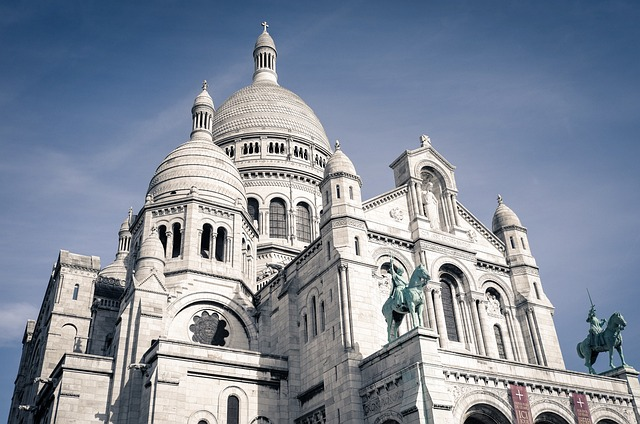
The Catholic Church, led by the Pope in Rome, traces its origins back to the early followers of Jesus Christ. The term “Catholic” means universal, emphasizing the Church’s worldwide presence and teachings that are meant for all.
It not only encompasses various traditions, rituals, and beliefs but also upholds the authority of the Pope as the spiritual leader.
The sacraments, including baptism, confirmation, and the Eucharist, hold significant importance within Roman Catholicism as they are considered essential for salvation and the nourishment of the soul.
The concept of the Virgin Mary and the veneration of saints are distinctive features that set Catholicism apart from other Christian denominations. Given its rich history, diverse traditions, and profound spiritual significance, the Catholic Church holds a prominent place in the tapestry of Christianity.
Brief History Of Catholicism
Tracing its origins to apostle Peter, who is considered the first pope, Roman Catholicism has a rich and intricate history. In the 4th century, Emperor Theodosius established it as the official religion of the Roman Empire, marking a significant milestone.
The Great Schism of 1054 then led to the division between the Western (Catholic) and Eastern (Orthodox) churches, shaping the course of Catholicism. The Counter-Reformation in the 16th century played a pivotal role in solidifying distinct Catholic doctrines and practices.
Today, the Catholic Church stands as a worldwide institution, actively involved in diverse ministries, missions, and charitable works, emphasizing its global impact and influence.
Core Beliefs And Practices Of Catholics
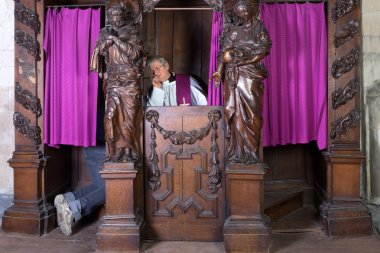
Catholics hold firm to the Nicene Creed, which eloquently conveys the foundational beliefs of the church. The sacrament of confession, also referred to as reconciliation, plays a vital role in the spiritual life of Catholics, enabling them to seek forgiveness for their wrongdoings.
At the heart of Catholic worship is the Mass, where the Eucharist is revered as the true presence of Lord Jesus Christ, symbolizing the core of their faith. Additionally, Catholics deeply respect the papacy, acknowledging the pope as the rightful heir of Saint Peter, the church’s first pope.
Furthermore, the church’s social doctrine underscores the principles of justice, peace, human dignity, and the sanctity of life, reflecting their commitment to upholding these values in society.
Examining The Commonalities
When exploring the commonalities between Catholicism and Christianity, it becomes evident that both faiths share core beliefs in the lord Jesus Christ and the new life he offers to mankind.
Additionally, the role of the Bible is significant in both Roman Catholicism and Protestantism. Moreover, Sunday holds a special place in the worship practices of both faiths.
The significance of shared traditions, such as the disciples of Jesus, Luke, and the priesthood, is also essential in understanding the common ground between these two branches of Christianity.
Furthermore, both Catholicism and Christianity emphasize the humanity and divinity of Jesus Christ. Additionally, they share a belief in the natural law and the mediation of Jesus Christ as the savior and mediator between God and mankind.
This emphasis on the human flesh and divinity of Jesus Christ serves as a fundamental similarity, reinforcing the interconnectedness of these two faiths.
Shared Traditions And Beliefs
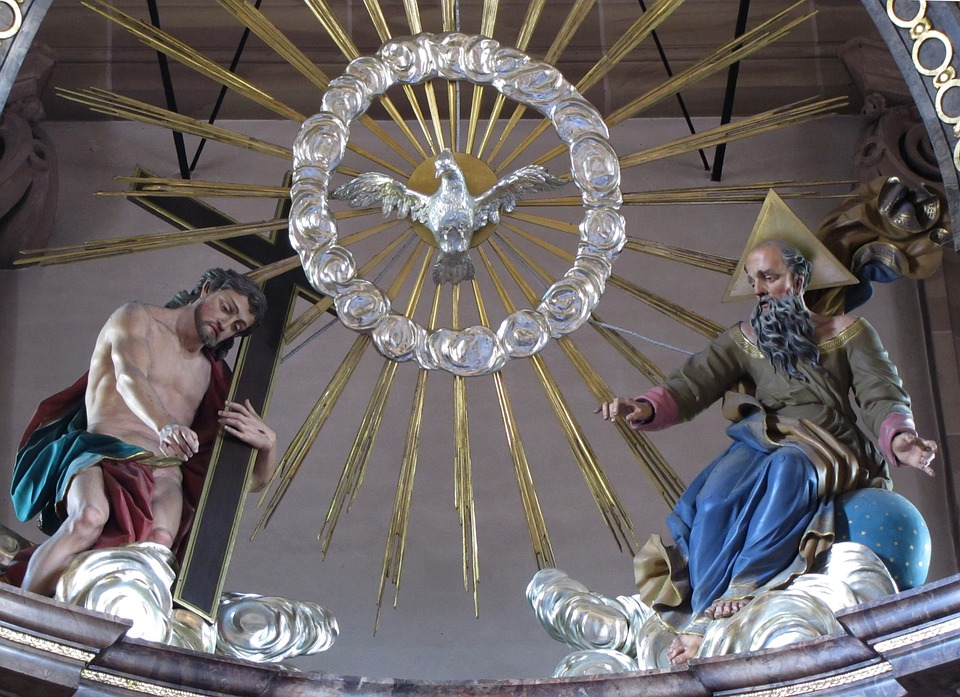
Both Christian and Catholic traditions follow the liturgical calendar, signifying important events in the life of Christ. The belief in the Holy Trinity, comprising the Father, the Son, and the Holy Spirit, is a fundamental doctrine in both faiths.
Additionally, the observance of Christmas, representing the birth of Jesus, and Easter, symbolizing the resurrection, holds significant importance in both traditions. Moreover, moral teachings, including the commandments, serve as a guide for ethical behavior within the respective faith communities.
It’s noteworthy that both faiths acknowledge the church as the community of believers, nurturing spiritual development and providing support.
The Role Of The Bible In Both Faiths
The Bible holds a position of paramount importance in both Catholicism and Christianity. It is revered as the authoritative scripture, conveying the word of God and providing guidance for faith and life.
Both faith traditions interpret the Bible as the revelation of God’s will, offering spiritual insight and guidance. The scripture is diligently studied, preached, and meditated upon, serving as the foundation for faith, doctrine, and moral teachings.
Believers in both faiths benefit from various translations and interpretations of the Bible, enriching their spiritual understanding. The sacred texts of the Old Testament and the New Testament illuminate the history, teachings, and salvation narrative, strengthening the spiritual foundation of both Catholic and Christian believers.
Highlighting The Key Differences
Views on Salvation:
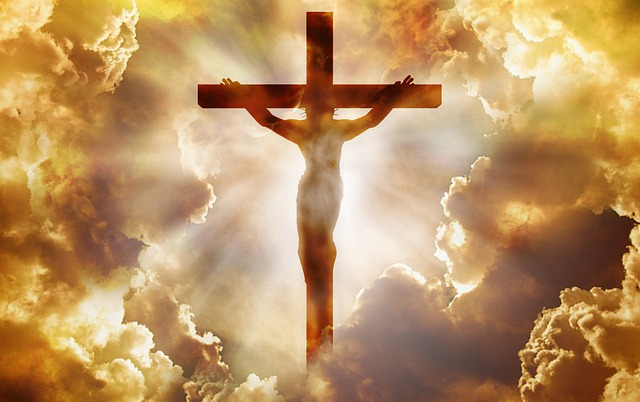
Christianity believes that salvation is achieved through faith in Jesus Christ, while Catholicism emphasizes the importance of faith and good works for salvation.
Approach towards Sacraments:
Catholics believe in seven sacraments as essential for receiving God’s grace, whereas Christians generally recognize only two sacraments: baptism and communion.
Perspective on Purgatory:
Catholicism teaches about the existence of purgatory, a place where souls are cleansed before entering heaven, while Christianity, in general, does not have a formal belief in purgatory.
Views On Salvation
Salvation for Catholics involves faith, good works, and sacraments, while many Christians believe in salvation by faith alone, unrelated to personal deeds. Both groups share the belief in the importance of salvation through Jesus Christ, with Christian denominations emphasizing the role of grace.
Additionally, Catholics view salvation as a lifelong process, distinguishing their perspective from that of some Christians. This highlights the nuanced differences in their beliefs about attaining salvation, reflecting the diverse interpretations within these faith traditions.
The emphasis on Jesus Christ as the savior is central to both Roman Catholicism and various Christian denominations, underscoring their shared foundation despite differing views on the specific means of achieving salvation.
Approach Towards Sacraments
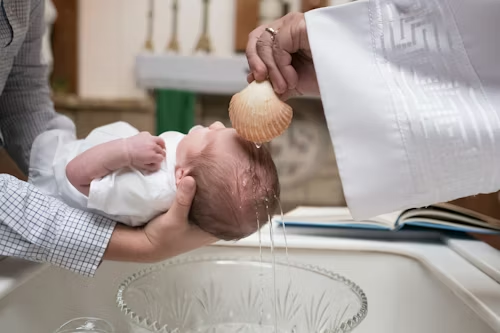
Sacraments are viewed differently within Catholicism and Christianity. For Catholics, sacraments hold significant importance as they are seen as vital for salvation and spiritual growth.
In contrast, Christians perceive sacraments as symbolic acts of obedience and worship. One notable difference lies in the number of sacraments, which varies between Catholicism and most Christian denominations.
While Christians consider sacraments as sacred rituals, Catholics view them as means of grace. The significance of sacraments in the Catholic faith differs from that in Christian beliefs. These differences reflect the diverse theological perspectives within these two religious traditions.
Perspective On Purgatory
The belief in purgatory forms a significant difference between Catholicism and many Christian denominations. Unlike most Christian groups, Catholics uphold the notion of purgatory as a place of purification after death.
This concept is distinct in Catholicism and not shared by many Christian denominations. The teachings of the Catholic Church emphasize purgatory as a unique doctrine, setting it apart from other Christian faiths.
While Catholics believe in the necessity of purgatory for the purification of souls, many Christians do not adhere to this belief. This divergence in belief regarding purgatory reflects a key distinction between the doctrines of Roman Catholicism and various Christian denominations.
The Role Of The Pope In Catholicism
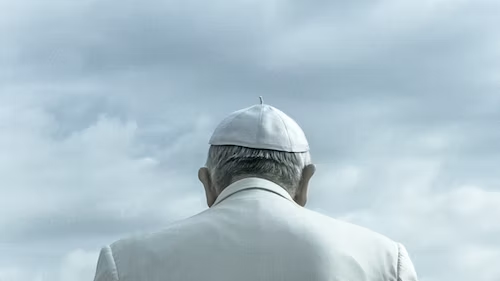
The Pope holds the highest authority in Roman Catholicism and is considered the successor of Saint Peter. As the Bishop of Rome, the Pope is the spiritual leader of the worldwide Catholic Church and is seen as the representative of Jesus Christ on earth.
The Pope’s role includes guiding the Church, interpreting the teachings of Jesus Christ, and making decisions on matters of faith and morals. Additionally, the Pope has the authority to appoint bishops, resolve disputes within the Church, and proclaim saints.
The concept of papal infallibility, where the Pope is considered free from error when speaking on matters of faith and morals, is also a significant aspect of the Pope’s role in Catholicism.
Understanding Papal Authority
The pope, with his infallibility on matters of faith and morals when speaking ex cathedra, is distinctive in Roman Catholicism. This belief is not shared by many Christian denominations, making it a defining aspect of the teachings of the Catholic Church.
Catholics regard the pope as the ultimate authority on church teachings, setting him apart from the beliefs of various Christian groups. His authoritative role is a significant divergence between the teachings of Catholicism and Christian faiths.
Papal authority is a unique feature of Roman Catholicism, emphasizing the difference in leadership structures between the two faiths.
Contrasting The Pope’s Role With Christian Leadership
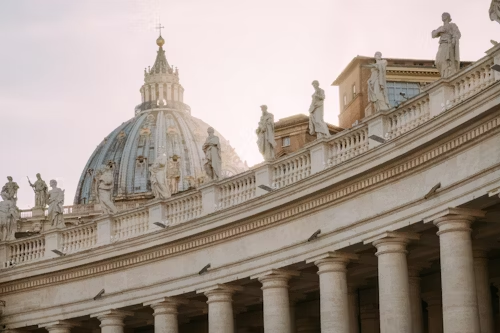
In the teachings of the Catholic Church, the pope is regarded as the vicar of Christ on earth, which sets him apart from Christian leaders in other denominations.
Unlike Christian leaders, the pope holds a unique level of authority and is considered the earthly head of the Roman Catholic Church, distinct from the leadership structures in Christianity.
This contrasts with the role of Christian leaders, as the pope is seen as the supreme spiritual authority, reflecting the different values and beliefs of Roman Catholicism.
The pope’s position as the mediator between God and mankind and his significance as the leader of the priesthood further distinguishes his role from that of Christian leadership models.
Worship And Rituals: A Comparative View
In both Catholicism and Christianity, worship and rituals play a significant role. While Catholics participate in Mass, involving the Eucharist and other sacraments, Christians engage in worship services where they pray, sing hymns, and partake in communion.
The role of the priest in leading Mass and the pastor in Christian services differs, with the Catholic priest viewed as a mediator between God and mankind, particularly during the Eucharist.
Additionally, Catholics observe Sunday as a holy day, whereas many Christians gather for worship on this day due to the resurrection of the Lord Jesus Christ. The significance of rituals such as baptism and confirmation also varies between the two faiths, with each tradition attributing distinct meaning to these practices.
Mass Vs Christian Worship Services
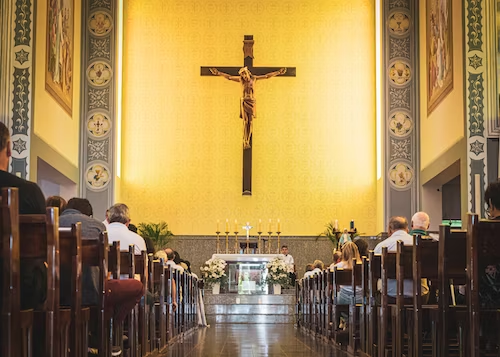
In Catholicism, the Mass holds a central place as the primary liturgical celebration of the Eucharist, setting it apart from the worship services in most Christian denominations.
Unlike Christian worship services, the Mass prominently emphasizes the sacramental nature of the Eucharist, a distinguishing feature of the Catholic faith, reflecting the diversity of religious practices.
The Mass is unique to the teachings of the Catholic Church and is not reflective of Christian worship services, which do not involve the same sacramental significance of the Eucharist.
This divergence in the sacramental emphasis of the Eucharist marks a clear difference in religious practices, highlighting the distinctive nature of the Mass in Roman Catholicism.
The Significance Of The Seven Sacraments In Catholicism
The seven sacraments play a crucial role in the Catholic faith and are distinct from the beliefs of most Christian denominations. From baptism to the Eucharist, these sacraments hold a pivotal place in the spiritual life of Catholics, setting their faith apart from that of different Christian groups.
The significance of these seven sacraments is unique to the teachings of the Catholic Church and is not shared by the majority of Christian denominations. These sacraments are a distinctive aspect of the Catholic faith, setting it apart from the beliefs of various Christian denominations.
Confirmation and holy orders are among the sacraments central to the teachings of the Catholic Church, reflecting its distinctive religious practices.
The Virgin Mary And The Saints In Catholicism
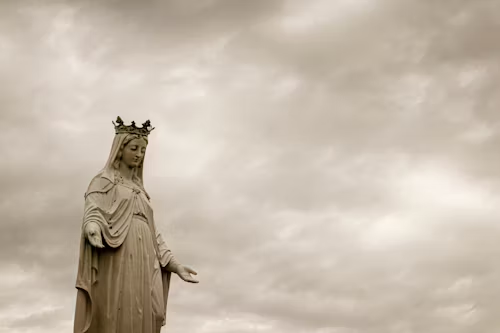
The Catholic Church’s teachings include the veneration of the Virgin Mary and the saints, reflecting its distinct religious practices. The devotion to the Virgin Mary and the saints is a defining characteristic of the Catholic faith, not present in the beliefs of various Christian denominations.
This is different from the beliefs of many Christian denominations, where the role of the Virgin Mary holds a central place in Catholic devotion. Additionally, the veneration of saints is a distinctive practice in Catholicism, not shared by the majority of Christian denominations.
The unique role of the Virgin Mary and the saints is exclusive to the teachings of the Catholic Church, setting it apart from the beliefs of different Christian groups.
How Do Catholics And Christians Differ In Their Perceptions?
Catholics and Christians differ in their perceptions in several ways. For Catholics, the pope is the spiritual leader and tradition is considered inspired by God. Christians focus on the teachings of the Bible and believe in salvation through faith in Jesus Christ.
Additionally, Catholics emphasize sacraments for salvation and believe in the doctrine of original sin.
Frequently Asked Questions
What are the key beliefs and practices of Catholicism?
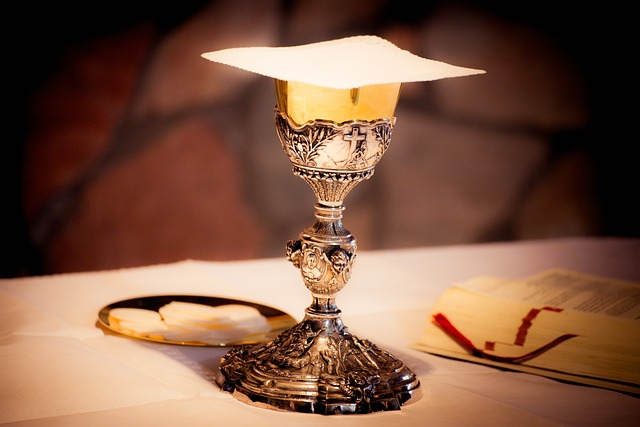
Catholicism, a branch of Christianity, places emphasis on the authority of the Pope and sacraments. Believers in Catholicism hold key beliefs such as the Holy Trinity, virgin birth, and resurrection of Jesus Christ.
Their practices revolve around the seven sacraments, including Baptism, Eucharist, Confirmation, Penance, Anointing of the Sick, Holy Orders, and Matrimony. Additionally, Catholics also emphasize prayer to saints and Mary as intercessors.
How does Catholicism differ from other branches of Christianity?
Catholicism stands apart from other branches of Christianity due to its strong emphasis on the authority of the Pope and the hierarchical structure of the Church.
Additionally, Catholics have unique beliefs in sacraments like confession and communion, and their rich traditions of ritual and ceremony set them apart from other Christian denominations.
Are there any notable historical events or figures that distinguish Catholicism from other forms of Christianity?
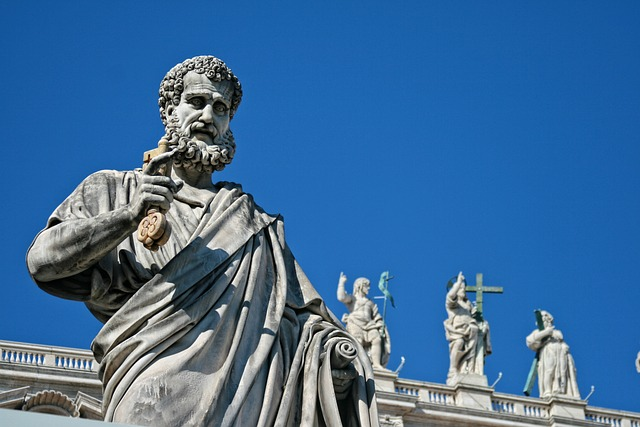
The split between the Catholic and Eastern Orthodox Churches in 1054 AD and the Protestant Reformation led by figures like Martin Luther and John Calvin are significant events that differentiate Catholicism from other forms of Christianity.
Within Catholicism, notable historical figures include popes like Saint Peter, Saint Gregory I, and Saint John Paul II. The authority of the Pope, sacraments, and devotion to Mary and the saints also play key roles in distinguishing Catholicism.
How can I choose between Catholicism and other Christian denominations?
Choosing between Catholicism and other Christian denominations is a personal decision. When making this choice, consider your beliefs, values, and traditions.
Research the teachings and practices of both Catholicism and other Christian denominations, and engage with their communities to gain a better understanding before making a decision.
Conclusion
In conclusion, while Catholicism and Christianity share many common beliefs and traditions, they also have significant differences that set them apart. Understanding these distinctions can provide a deeper appreciation for the various branches of Christianity and foster greater interfaith dialogue and understanding.
Whether you choose Catholicism or another Christian denomination ultimately depends on your personal beliefs, interpretations, and spiritual journey. It’s important to continue seeking knowledge, asking questions, and engaging in respectful conversations to broaden your perspective.
Feel free to share this blog on social media to spark discussions and encourage others to explore the similarities and differences between Catholicism and Christianity.